Children's Cancer Inst.
Health & Tech.

An incredible journey with We Discover. Over a year as a Product Designer with CCI's digital transformation team, building a new digital platform for the Zero Childhood Cancer Program (ZERO), Australia's world-leading precision medicine program for Children's Cancer Institute.

ZeroDash data visualisation

Role

Product Designer via We Discover, working alongside CCI's digital transformation team for just over a year.

Designed a platform to support clinicians and researchers running the Zero Childhood Cancer Program (ZERO).

Output

  • ZeroDash Phase 1: feature enhancements
  • ZeroDash Phase 2: feature release

Awards

Good Design Awards. Best in Class 2023.

Case Study

ZeroDash. How it works.

Context: Each child in ZERO has their cancer analysed at a molecular level to identify genetic alterations driving the disease. Those findings shape diagnosis, prognosis, risk stratification and treatment, but only if huge volumes of analytical data can be processed and interpreted into something clinicians can act on.

The problem: That interpretation is slow, expert-intensive, and a bottleneck on how many children the program can reach.

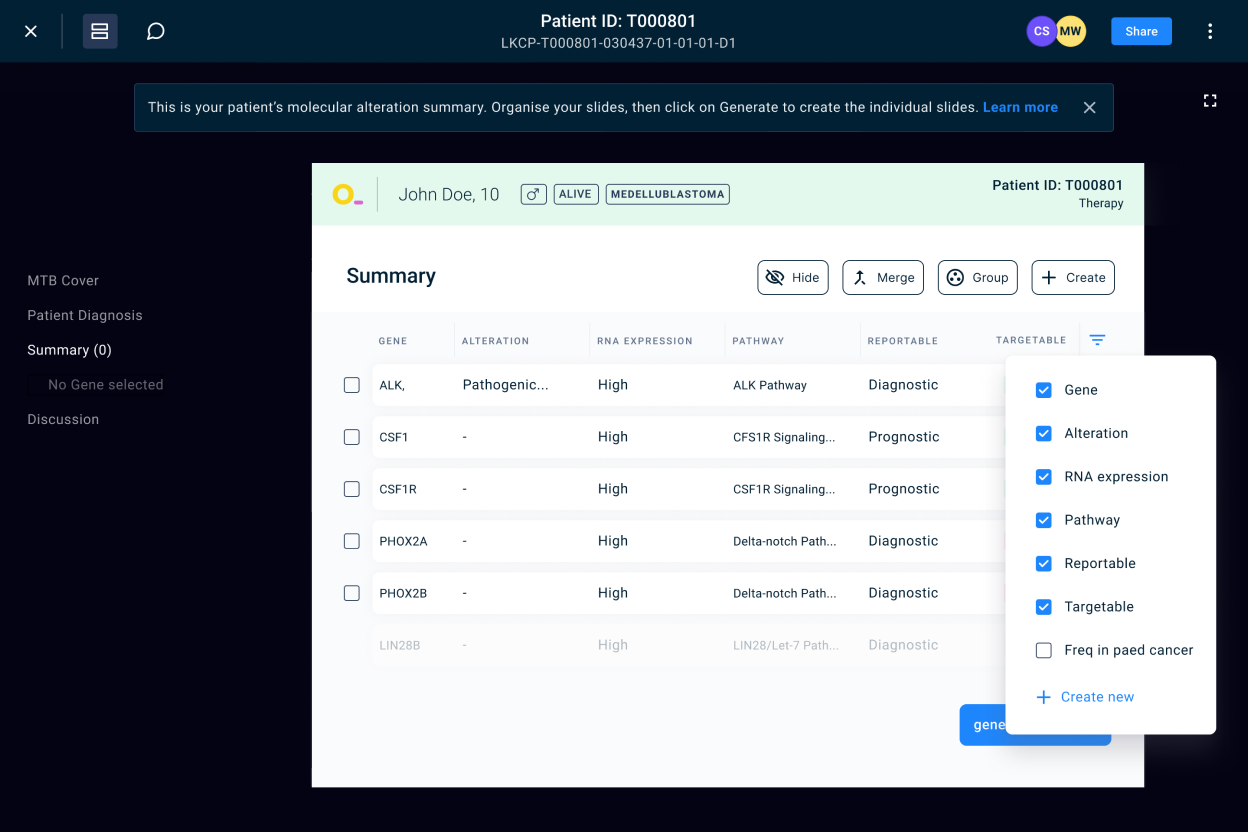
The platform: ZeroDash streamlines the data matching and interpretation workflow, from systematic mutation prioritisation through to a clinician-ready patient diagnosis summary, turning days of expert work into hours.

Impact

By streamlining ZERO's data matching and interpretation, ZeroDash reduces the time taken to generate a precision medicine report for a child by 70%. It also enabled the program to increase patient enrolment by eightfold with only a 25% increase in personnel.

The platform has further potential, extending to the ~151,000 newly diagnosed adult cancer patients each year in Australia, or supporting developing countries to maximise scarce healthcare personnel and realise the benefits of precision medicine at scale.

Deliverables
  • Clinician-facing dashboard UX & UI
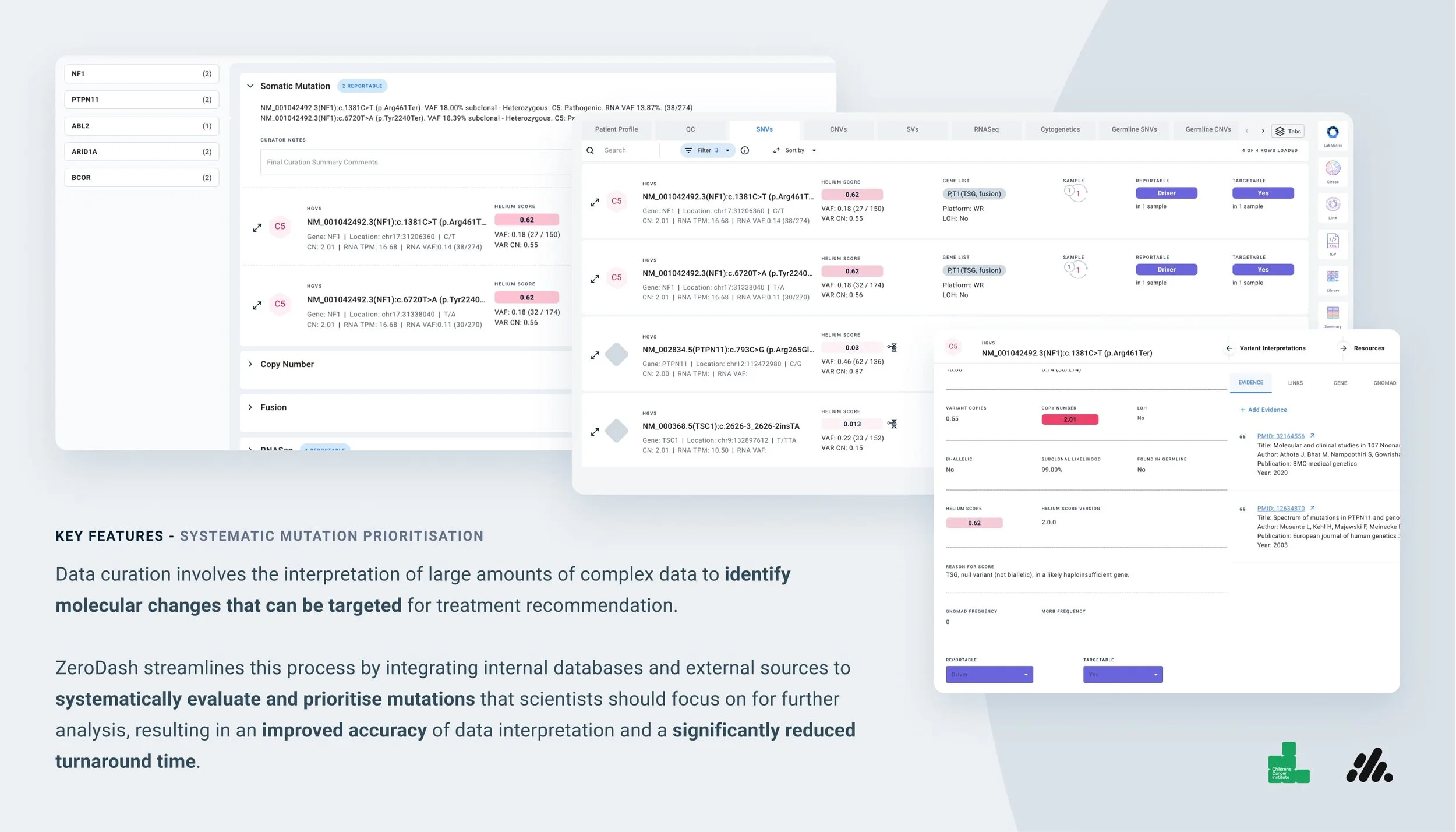
  • Systematic mutation prioritisation workflow
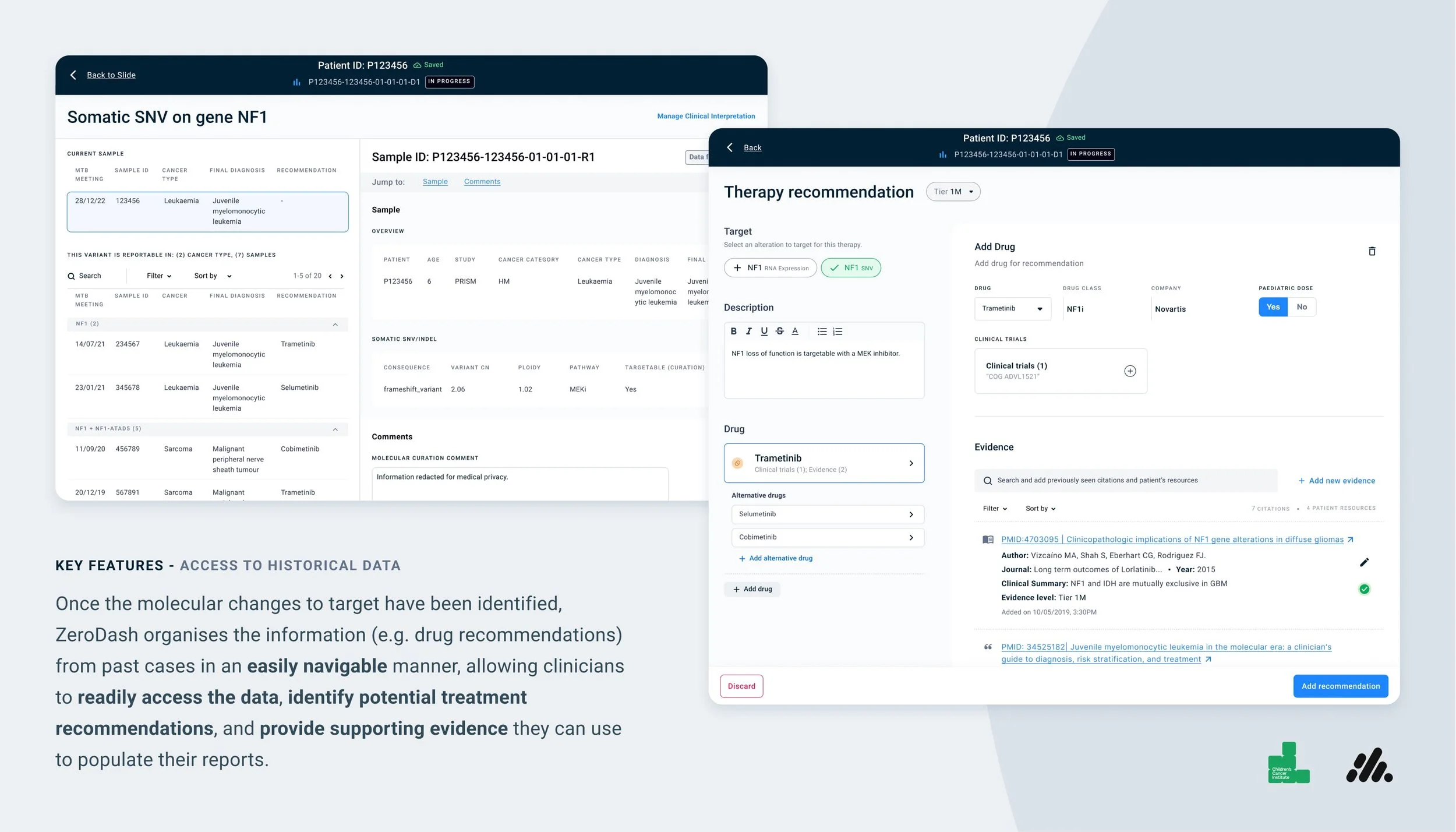
  • Patient historical data view
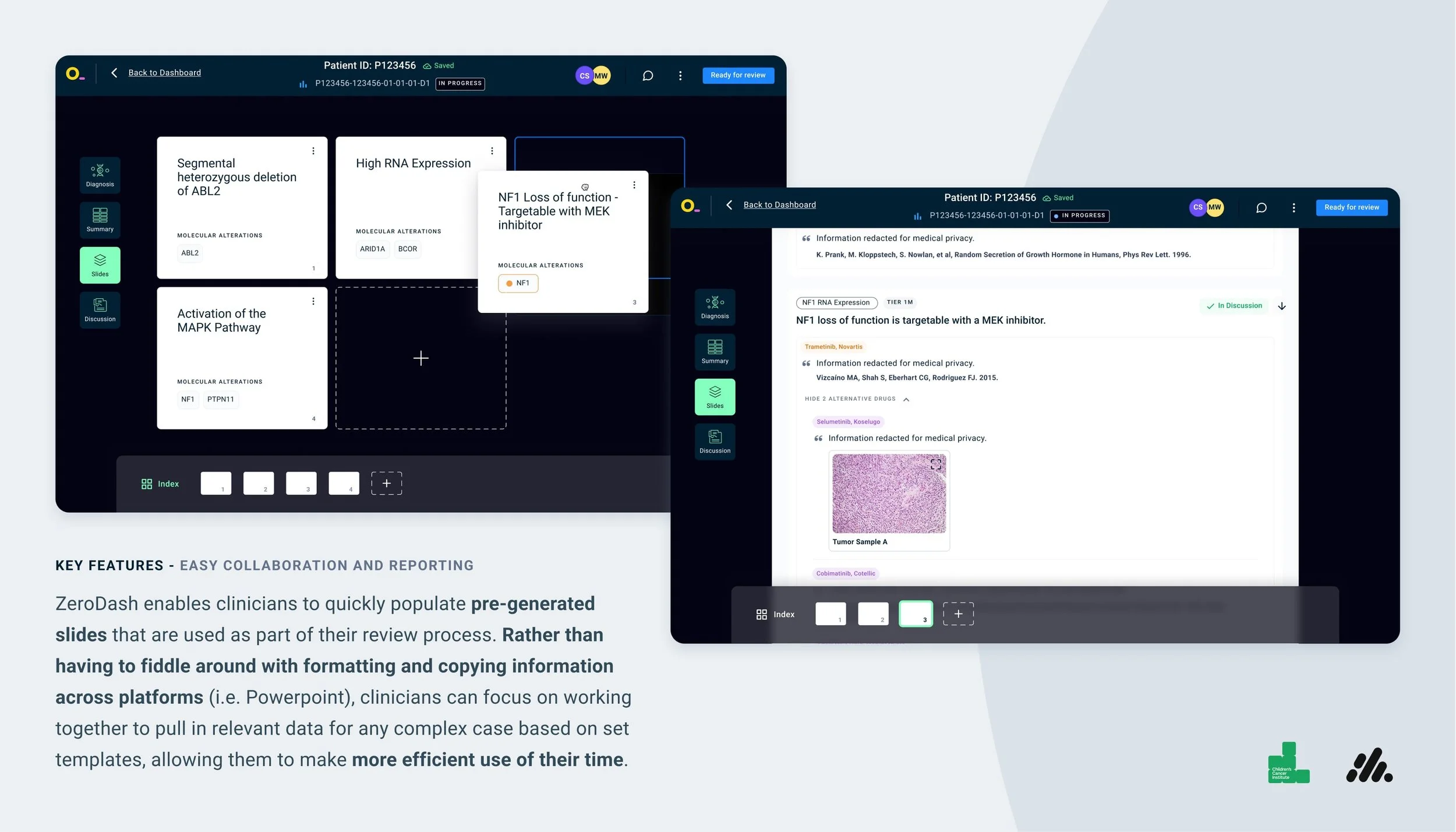
  • Collaboration & reporting tools
  • Patient diagnosis summary

Design.

01 / 6
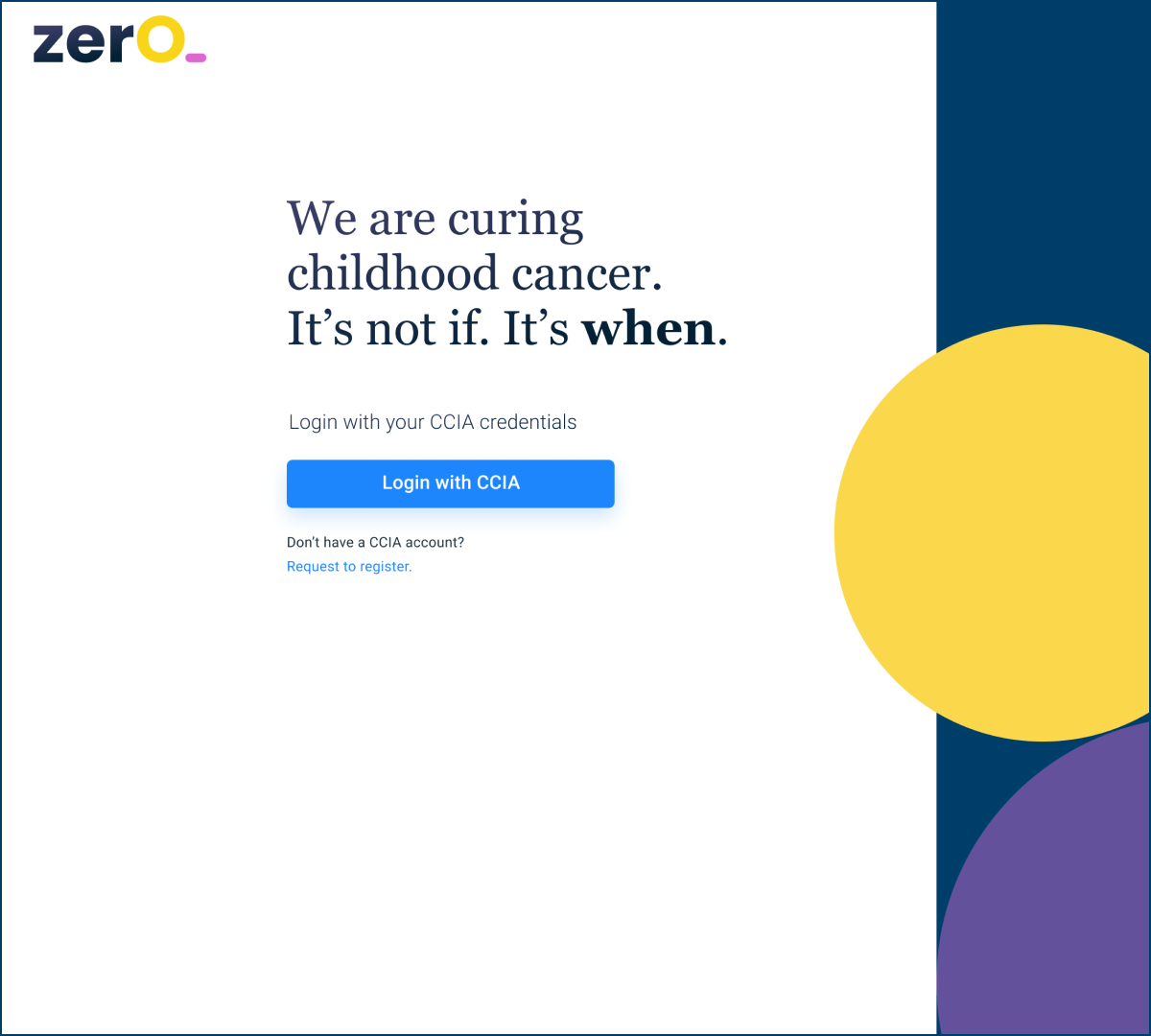
ZeroDash Phase 1: login
Phase 1: Login
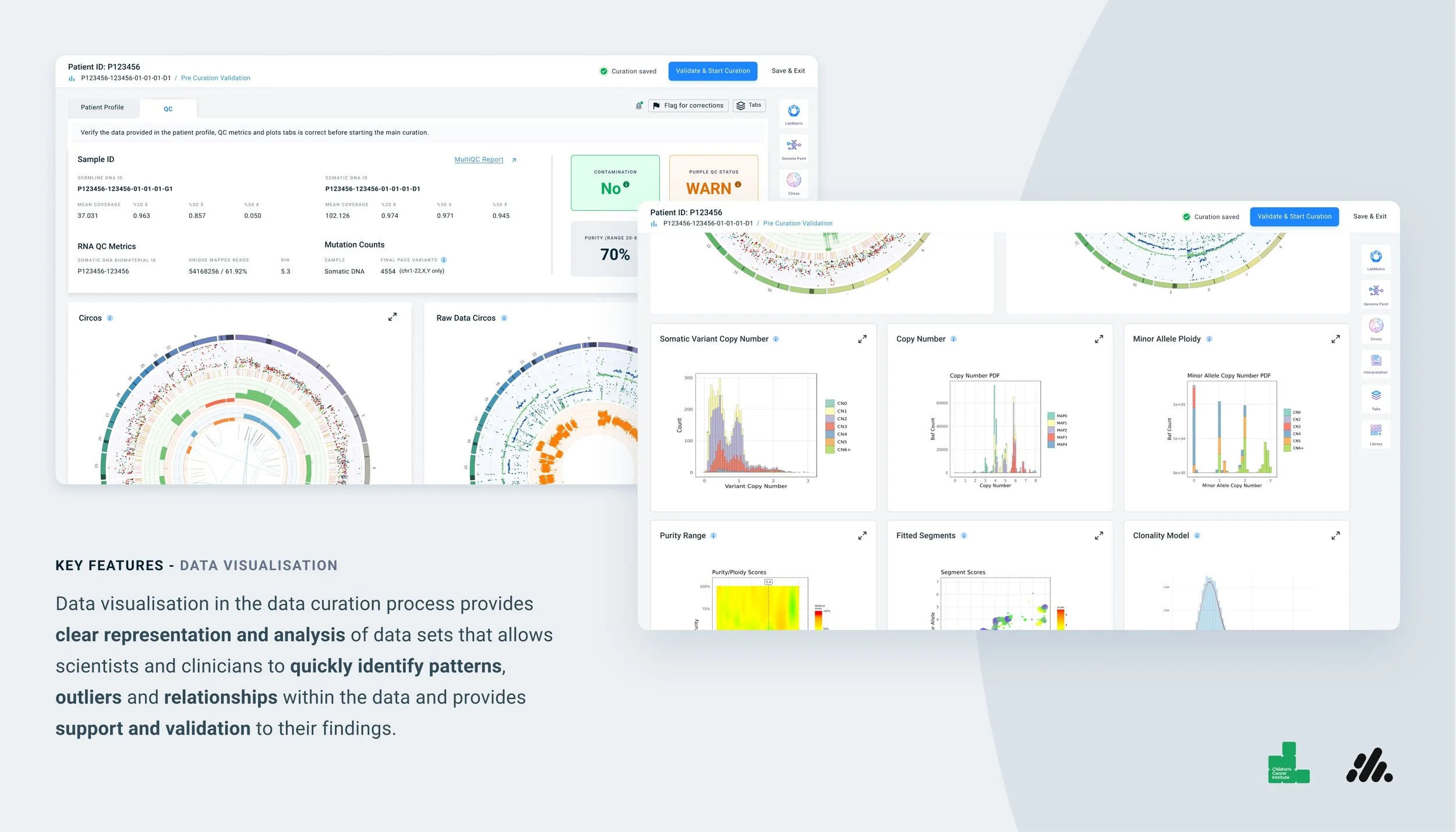
ZeroDash Phase 1: data visualisation
Phase 1: Data visualisation
ZeroDash Phase 1: systematic mutation prioritisation
Phase 1: Systematic mutation prioritisation
ZeroDash Phase 2: patient historical data
Phase 2: Patient historical data
ZeroDash Phase 2: collaboration and reporting
Phase 2: Collaboration & reporting
ZeroDash Phase 2: patient diagnosis summary
Phase 2: Patient diagnosis summary

Ways of working

I follow the double-diamond creative process, guided by customer activity, pain points and feedback. Agile methodologies: research, design, learn, repeat.

  1. 01

    Inception

    Question and inform the product brief, set requirements and business objectives, and get backing from the business to kick-start the initiative.

  2. 02

    Research & discovery

    Diverging. Testing strategy. Quantitative and qualitative. Continue to refine data findings to support design thinking.

  3. 03

    Concept

    Draft hypothesis and validate with customers. Test, iterate, test, repeat.

  4. 04

    Define

    Consolidate learnings, enhance designs. Play back to business. Get ready to roadmap.

  5. 05

    Development

    Technical design for development. Build, test, iterate.